From Uncertainty to Clarity: Visualising Your Future Home
One of the most important parts of my role as an interior designer isn’t just creating a beautiful home - it’s helping clients truly understand the vision behind it throughout the process.
Because no matter how well thought-out a design is, if it’s difficult to visualise, it can feel uncertain. And when you’re making decisions about your home, that clarity is everything.
Starting with the Foundations: 2D Design
Every project begins with 2D drawings - starting out as spatial plans, these are then further developed into detailed floor plans and elevations that form the foundation of the design.
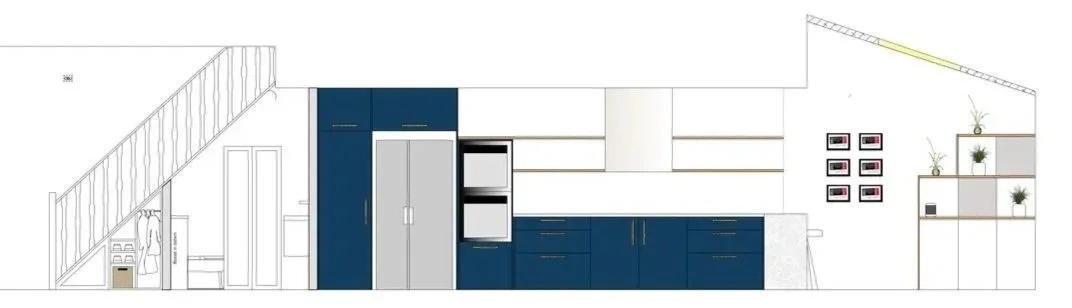
This stage is essential, not only for accuracy but also for ensuring I’ve considered every angle of the space and how each element interacts with the others. It’s about making the most of every inch, refining layouts, and resolving potential challenges early on.
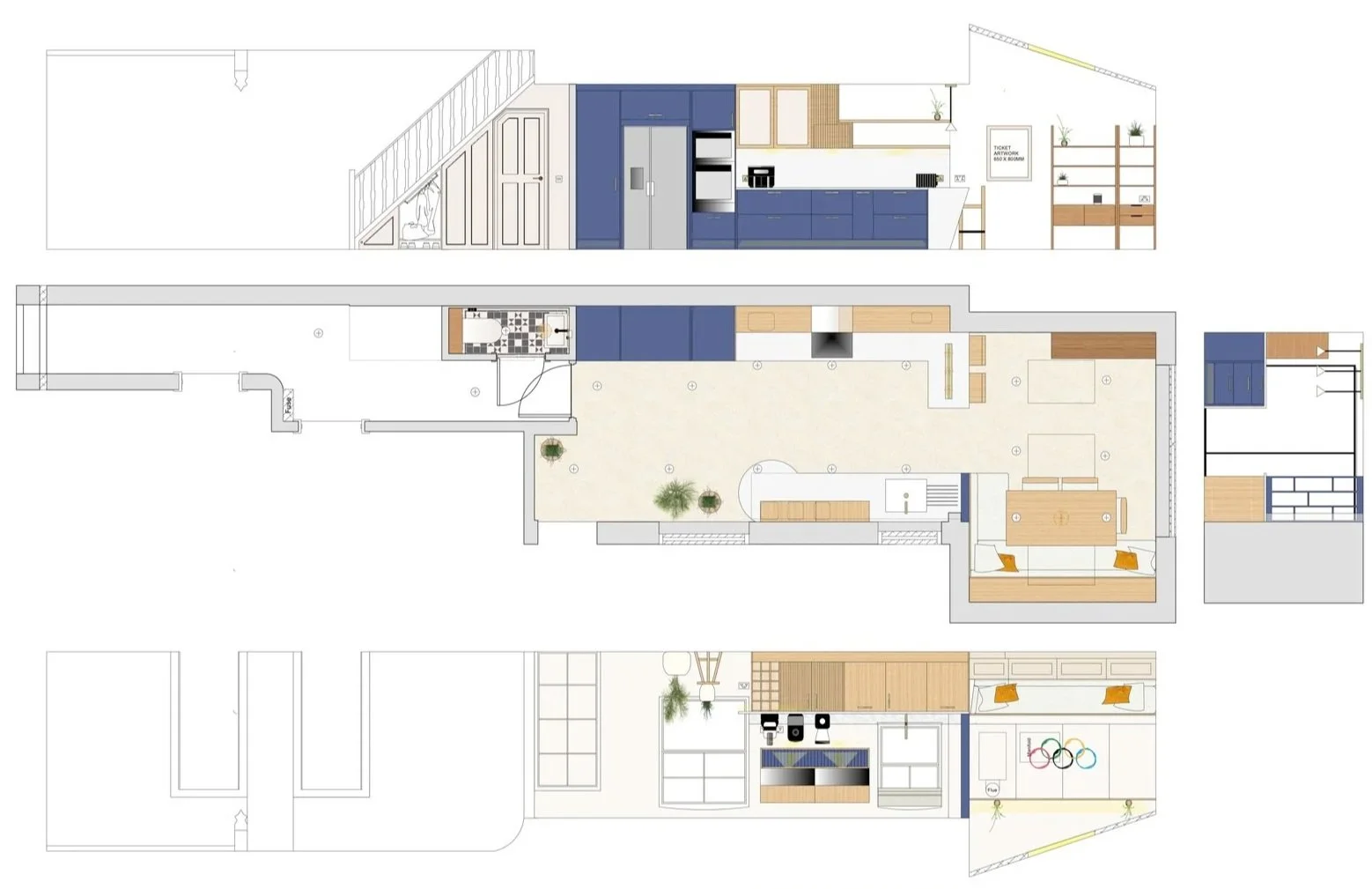
Working in 2D also gives clients their first glimpse into what the overall project could become. It is the beginning step to bringing structure to ideas by turning concepts into something easier to imagine.
Just as importantly, it allows every detail to be carefully planned and resolved - right down to the millimetre. This means any necessary changes can be made early in the process, long before work begins on site.
Why Visualising a Space Isn’t Always Easy
While 2D drawings are incredibly valuable, they don’t always tell the full story.
On many occasions, I’ve found that clients naturally struggle to fully visualise a space from 2D plans alone. While the plans and elevations are incredibly detailed, they are still technical by nature. For anyone not used to reading them, it can be difficult to translate flat renders on a page into a real, lived-in space.
A floor plan doesn’t always show how a room will feel when you walk into it, how the proportions will come together, or how different elements will sit alongside each other in reality.
This can sometimes lead to uncertainty. Not because the design isn’t working, but simply because it’s hard to fully picture the result.
Bringing the Design to Life with 3D
This is where 3D visualisations become such an important part of the design process.
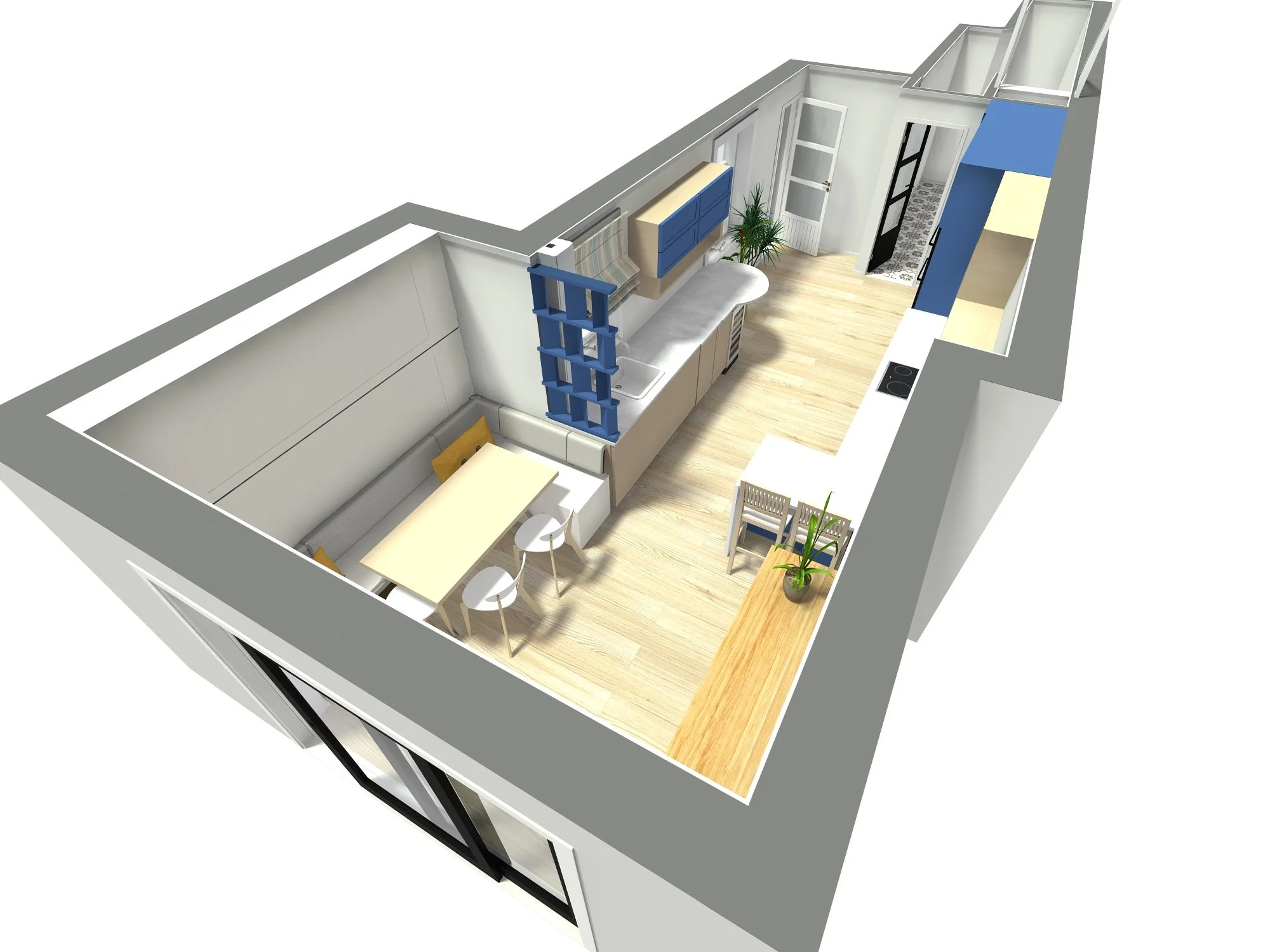
Using 3D imagery, I’m able to explore layout ideas and show clients what’s truly possible within their space. It allows clients to see proportions, understand flow, and get a real sense of how everything will come together.
These visuals provide a much deeper level of clarity, helping clients to imagine not just the layout, but the atmosphere of their home.
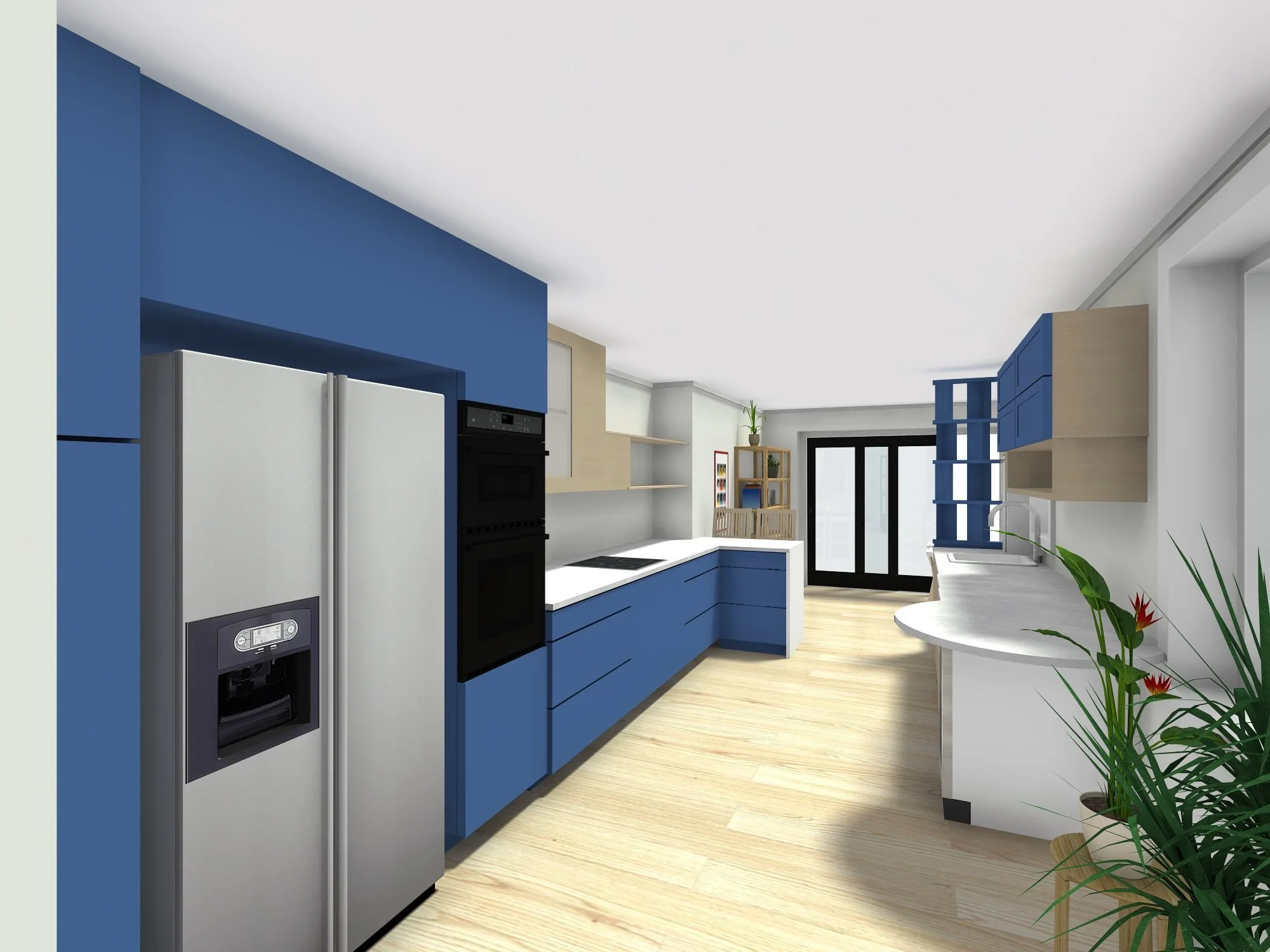
They also play a key role in decision-making. Being able to see the design in this way means we can make changes and refinements early on, with a clear understanding of how those decisions will translate into the finished result.
The Design Journey
The combination of both 2D and 3D design can help create a smoother, more confident experience for clients.
2D: ensures every detail works
3D: Bringing those details to life in a way that clients can understand
Through interacting together, they can help bridge the gap between concept and reality, making the entire process feel clearer, more collaborative, and more enjoyable!