Transitioning from Moodboard to Reality: Bringing Your Interior Vision to Life
One of the most exciting stages in any interior design project is seeing an aspired vision begin to take shape. What starts as a collection of moodboards and ideas gradually evolves into something tangible, as you move into the art of the possible - organising samples and creating sample boards. It’s the moment a design shifts from what could be to what will be.
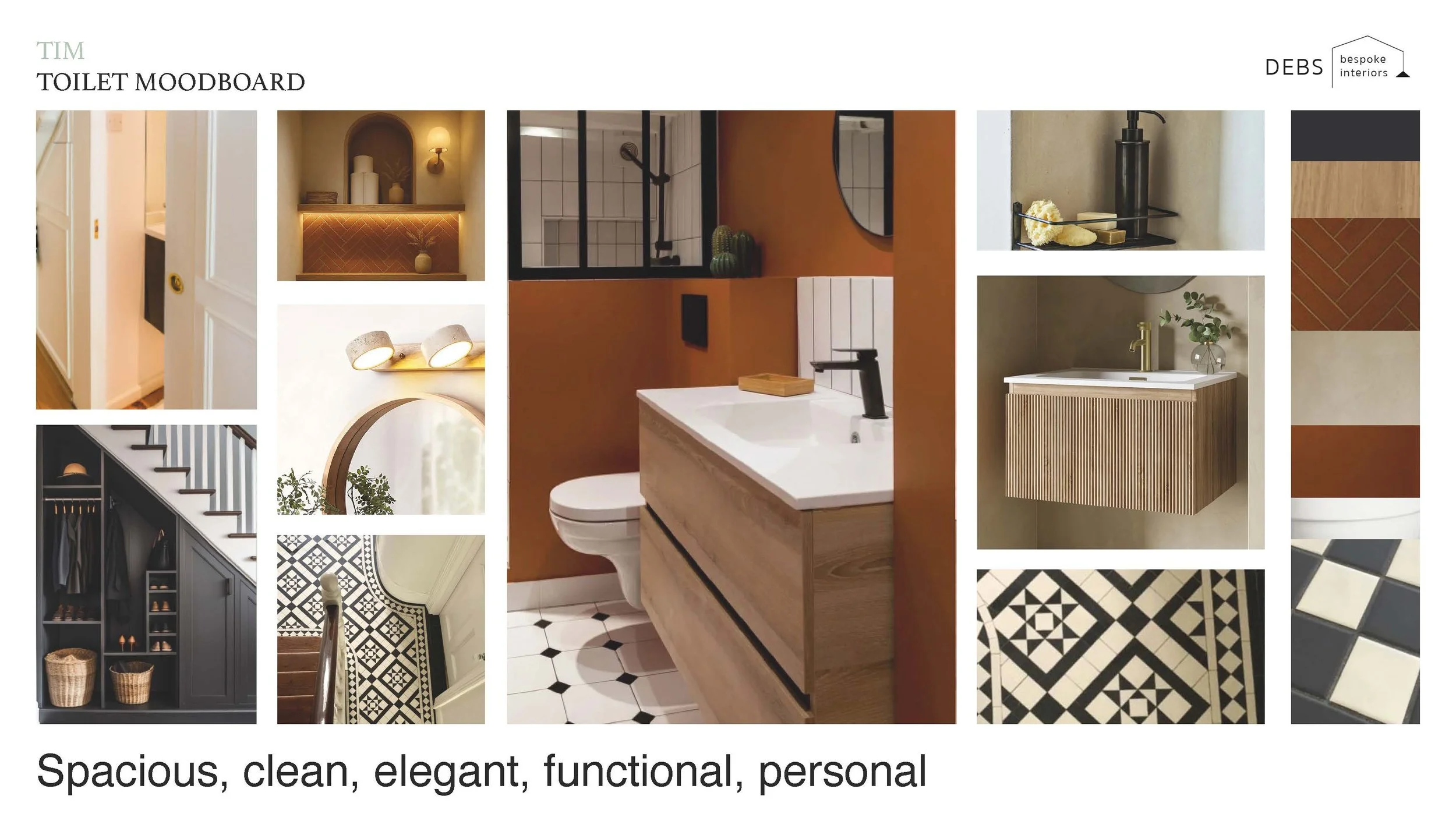
Moodboard
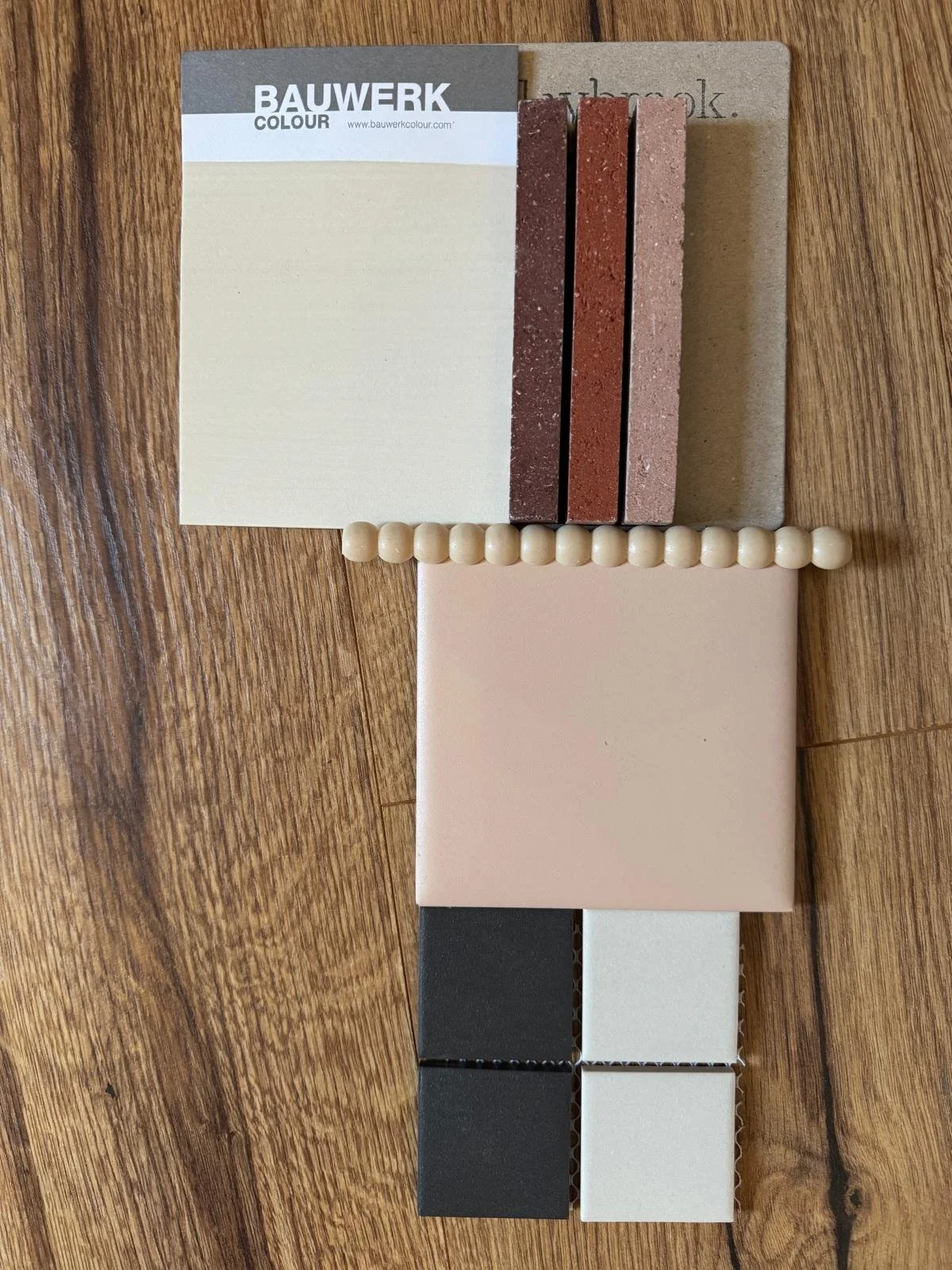
Sample selection
From Inspiration to Implementation
While I always maintain a well-stocked sample library, every project is unique. No two spaces, or clients, are the same, so the detailed design stage often involves sourcing new samples. This typically means visiting a range of retailers to see and feel materials in person, and carefully considering what will work best for each project.
The Importance of Layering and Budgeting
Digital moodboards can only take you so far. The strongest design outcomes come when you begin to physically layer textures, materials, and colours together, testing how they interact in real space.
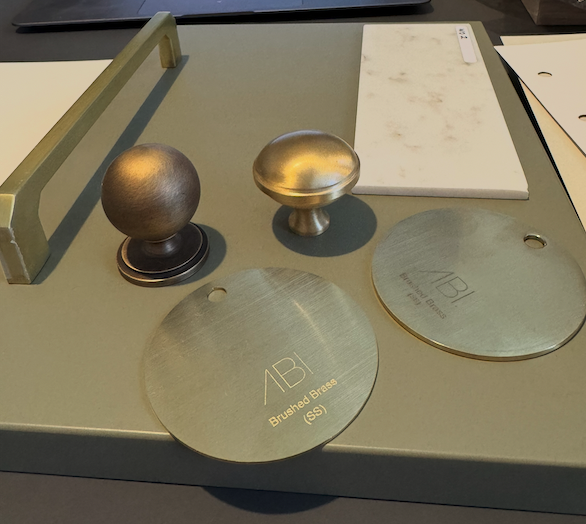
How does a fabric sit against a wood finish?
Does a paint tone shift under natural light?
Do the materials complement each other or compete?
Being able to physically see and feel materials side by side allows you to refine decisions and develop a scheme that feels cohesive, intentional, and well considered.
This process also plays an important role in budgeting. Working with samples allows you to compare different price points at the same time, making it easier to understand where value is being added. Not every element needs to be high-end, and seeing everything together helps you identify where costs can be reduced and where it is worth investing more to achieve impact.
When to Sample (and When Not To)
Not everything needs to be sampled, and in some cases, it’s not even possible. For example, off-the-shelf items like plant pots may be chosen without physical samples.
However, for larger ticket pieces, sampling is essential.
Sofas, for instance, should always be experienced in person - both in terms of fabric and comfort.
Rugs and curtains, particularly more budget-friendly or non-bespoke options, can sometimes be a leap of faith unless viewed in-store.
This raises an important question in every project:
“Where do you take the risk of buying online, and where do you insist on seeing and feeling first?”
What Makes a Good Sample Selection?
When working with samples, there are a few key considerations:
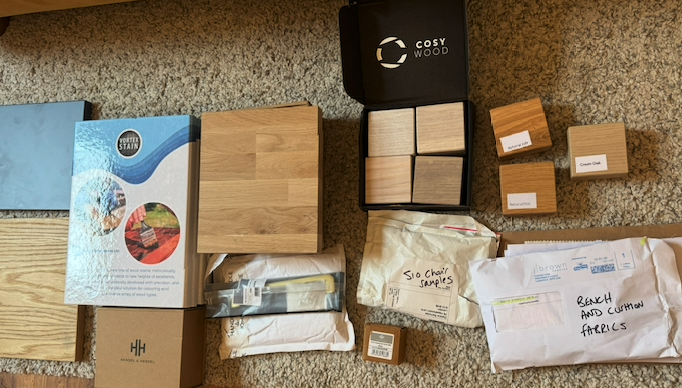
Colour matching
Texture and variety
Material understanding
These factors are crucial in turning a concept into a practical, livable design.
Managing the Process
An expert designer can often work across multiple rooms at once, sourcing samples across spaces, which not only speeds up the process but also contributes to whole-home cohesion.
However, if deciding to approach this yourself, it's often better to start smaller with one room at a time. Sample sourcing and item specification can quickly become overwhelming, so focusing your attention on a single space can help maintain clarity and direction.
Why Physical Samples Matter
At the end of the day, no digital tool can replace the experience of physically interacting with your materials.
You can’t beat touching the fabrics, seeing the colours in different lights, and understanding the finishes before committing.
Because once everything is installed, it’s too late to second-guess.
Transitioning from moodboard to reality is where design truly comes alive. It’s a process of refinement, decision-making, and creativity - one that ensures your final space not only looks beautiful but feels exactly as you imagined.